


Starting a Systematic Investment Plan (SIP) is a popular way to build wealth gradually through regular mutual fund investments. However, financial situations can change, and investors may sometimes need to pause or discontinue their monthly contributions.
This raises an important question: what happens when you stop a SIP? Does your invested money disappear, do you lose your returns, or does your investment continue to grow?
Understanding the impact of stopping a SIP can help you make informed financial decisions without disrupting your long-term goals.
At MintWise, we believe that understanding your investment options is an important step towards building a more confident financial future. In this blog, we will explore what happens to your existing investments, how stopping a SIP affects your returns, and what you should consider before discontinuing your contributions.
What Happens When You Stop a SIP?
When you stop a SIP, you discontinue the scheduled investment instalments in a mutual fund. However, it does not automatically withdraw or sell the units you have already purchased.
Here is what generally happens when you discontinue your SIP:
- Future SIP instalments stop once the cancellation request is processed.
- Your existing mutual fund units remain in your investment portfolio.
- The value of your existing units continues to fluctuate according to the fund’s Net Asset Value (NAV).
- You can continue holding the investments without making additional contributions.
- You can redeem your units separately whenever you need money, subject to scheme rules and applicable conditions.
- You may start a new SIP in the same or another mutual fund scheme in the future.
The important distinction is that stopping a SIP means stopping future investments, not withdrawing existing investments. Your accumulated units remain invested unless you separately submit a redemption request.
Does Stopping a SIP Affect Your Existing Mutual Fund Units?
No, stopping your SIP does not directly affect the mutual fund units you have already purchased. The units remain registered in your folio and continue to be part of your investment portfolio.
Once you stop contributing, your existing investments can still participate in market movements. If the fund’s underlying securities perform well, the NAV may rise. If the market experiences a downturn, the NAV may fall.
Your investment continues to grow or decline
After cancelling your SIP, your accumulated mutual fund units remain invested in the scheme. Their value is determined by the fund’s performance and market conditions.
You are not required to continue investing monthly to retain your existing mutual fund units. However, your portfolio will no longer receive fresh investments through that SIP.
This means that while your existing investment may continue to grow, you lose the opportunity to add more money regularly and benefit from investing across different market conditions.
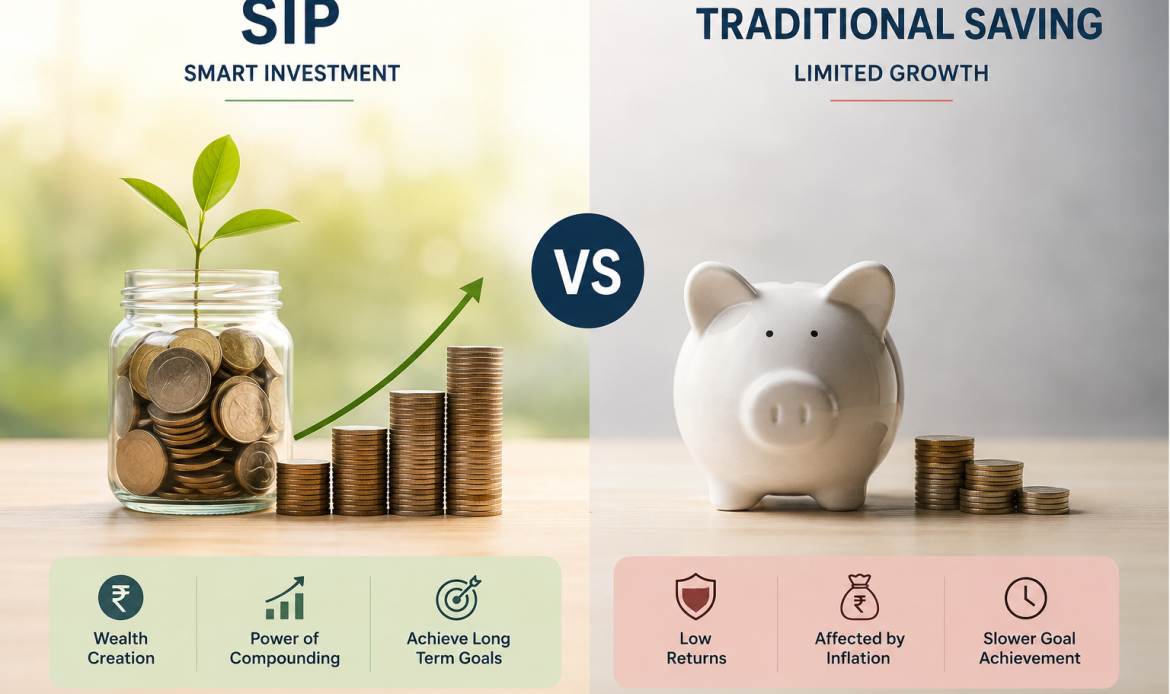
Can you keep your mutual fund investment after stopping the SIP?
Yes. You can discontinue your SIP and continue holding your mutual fund units. You may choose to keep them invested until your financial goal is approaching or until you need the money for a planned expense.
However, holding your investments for a longer period does not guarantee positive returns. Mutual fund values are market-linked, and your investment may experience fluctuations.
What Happens to Your Wealth Creation Goal When You Stop a SIP?
A SIP is often started to achieve a financial goal, such as buying a house, funding higher education, planning retirement or building wealth over time.
When you stop a SIP, your existing money continues to be invested, but the wealth creation process may slow down because you are no longer adding new money regularly.
The impact of stopping a SIP on long-term wealth
Regular investing helps investors build a corpus gradually. Each instalment contributes to the overall investment and gets its own time in the market.
When you stop investing, your existing money may continue to benefit from compounding, but the absence of new contributions can affect your final corpus.
For instance, an investor planning to build a retirement corpus may find that discontinuing a SIP several years before retirement leaves a gap in the amount required. Similarly, a parent saving for a child’s education may need to reassess the investment plan if contributions are stopped midway.
The impact depends on when you stop investing, how long your existing investment remains invested, market performance and how much you have already accumulated.
One practical example of stopping a SIP midway
Suppose an investor starts a ₹10,000 monthly SIP with a long-term goal of building wealth over 20 years, assuming a hypothetical annualised return of 12%.
| Investment approach | Approximate value |
| Continue ₹10,000 monthly for 20 years | ₹99.9 lakh |
| Invest ₹10,000 monthly for 10 years, then stop contributions and remain invested for another 10 years | ₹49.9 lakh |
Illustrative calculation using a 12% annualised return assumption, monthly compounding approximation and no guarantee of actual returns. Actual mutual fund returns may differ significantly.
This illustration shows that stopping regular contributions may reduce the corpus you could potentially accumulate. However, the existing investment can still grow if it remains invested and the market performs favourably.
The difference highlights why reviewing your SIP before discontinuing it can be useful, especially when the investment is linked to an important long-term financial goal.
SIP Pause vs SIP Stop: Which Option Should You Choose?
Before cancelling your SIP permanently, understand the difference between pausing and stopping it. Both options can help manage your investments, but they serve different financial needs.
| Feature | Pause SIP | Stop SIP |
| Purpose | Temporary break | Discontinue future investments |
| Future instalments | Temporarily suspended | Cancelled |
| Automatic restart | May resume after pause period, depending on the facility | Usually requires a new SIP |
| Existing units | Remain invested | Remain invested |
| Suitable for | Temporary financial difficulties | Long-term changes in financial circumstances or investment plans |
When should you pause your SIP?
Pausing may be suitable if you are facing a temporary cash-flow issue but expect your income or financial situation to improve.
If you have recently changed jobs, need to manage unexpected expenses or have a temporary reduction in income, pausing your SIP may help you manage your finances without permanently discontinuing your investment plan.
Pause facilities, durations and conditions vary between mutual fund companies. Check whether your fund house offers the facility and whether the SIP will restart automatically after the pause.
When should you stop your SIP?
Stopping an SIP may make sense when your investment strategy or financial priorities have changed significantly.
You may consider discontinuing a SIP when:
- Your monthly expenses have increased significantly.
- You need to prioritise emergency savings or repay expensive debt.
- You want to review your mutual fund portfolio and change your investment allocation.
- You are approaching your financial goal and need to reassess your risk exposure.
- Your income has reduced for an extended period.
- You want to replace an existing investment with another option after proper evaluation.
Stopping a SIP should ideally be a financial decision based on your current situation rather than an emotional reaction to market movements.
What Happens to SIP Returns When You Stop Investing?
One of the biggest concerns among investors is how stopping an SIP affects the potential returns on their investments.
When you invest regularly, each instalment gets time to participate in the potential growth of the mutual fund. Earlier investments have a longer investment horizon, while newer instalments have less time to grow.
When you stop investing, your existing units continue to experience market movements. However, you lose the opportunity to invest additional money during the remaining period.
Does compounding continue after stopping an SIP?
Yes, compounding can continue on your accumulated investment as long as it remains invested and earns returns. You do not have to make fresh contributions every month for your existing investment to experience growth.
However, compounding is not a fixed or guaranteed process in mutual funds. Returns may vary depending on the fund’s investments and market conditions. Your corpus can increase or decrease over time.
Stopping an SIP also means that you are no longer adding fresh capital that could potentially participate in future market growth. Therefore, the final amount accumulated may differ from what you could have achieved by continuing your investments.
Will You Pay Any Penalty for Stopping a SIP?
Generally, mutual fund companies do not charge a penalty simply because you discontinue your SIP. Stopping the investment instruction is different from selling your existing mutual fund units.
However, investors should understand the possible costs associated with their investment.
1. Bank charges for failed SIP payments
If you do not formally cancel or pause your SIP and your bank account does not have sufficient funds for the scheduled debit, the bank may levy a charge for a failed auto-debit transaction.
Repeated failed instalments can also lead to automatic SIP cancellation under applicable procedures. Therefore, if you no longer want to continue investing, it is better to submit a proper cancellation request rather than simply allowing payments to fail.
2. Exit load on redemption
Exit load is a charge that may apply when you redeem mutual fund units within a specified period, depending on the scheme’s terms.
Stopping your sip does not attract an exit load because your existing units are not being sold. If you later redeem your units, applicable exit-load conditions may apply.
Each SIP instalment is treated as a separate purchase for determining its holding period. Therefore, the exit load on units redeemed may depend on when those units were purchased.
3. Tax on redemption
Stopping your sip does not itself create a capital gains tax liability because there is no sale of units.
Tax implications generally arise when you redeem or transfer your mutual fund units, depending on the scheme type, holding period, applicable tax laws and your individual circumstances.
If you plan to withdraw your investment, review the tax implications before making a redemption decision.
How to Stop a SIP and Restart It When You’re Ready
If you have decided to discontinue your sip, it is important to follow the correct cancellation process. Similarly, if your financial situation improves later, you can start investing through a SIP again. Understanding both processes can help you manage your mutual fund investments without unnecessary confusion.
Steps to Stop a SIP
Step 1: Log in to Your Investment Platform
Visit the mutual fund company’s website, mobile application or the investment platform through which you registered your SIP.
Step 2: Select the SIP You Want to Discontinue
Review your active SIPs and select the specific investment plan you wish to stop. Check the fund name, monthly investment amount, debit date and folio details before proceeding.
Step 3: Submit the Cancellation Request
Choose the SIP cancellation option and complete the required confirmation process. Depending on the platform, you may need to verify your request using an OTP or other authentication details.
Step 4: Check the Cancellation Status
Do not assume that your SIP has stopped immediately after submitting the request. Check its cancellation status and confirm that future instalments will not be debited.
SIP cancellation requests are subject to the applicable processing timelines of the mutual fund house and investment platform. Submit your request sufficiently ahead of the next scheduled debit to avoid unwanted deductions.
Step 5: Review Your Existing Investments
Once the SIP is cancelled, review your existing mutual fund units separately. You can choose to keep them invested, redeem them if you need money or reassess whether the fund still suits your long-term financial goals.
Remember, stopping an SIP does not automatically cancel all bank mandates associated with your investments. If you have multiple SIPs using the same mandate, check carefully before cancelling a bank instruction that could affect other investments.
Can You Restart Your SIP After Stopping It?
Yes, you can start investing through a SIP again after stopping an earlier one. Discontinuing a SIP does not permanently prevent you from investing in mutual funds.
You can restart investing in the same mutual fund scheme or select another scheme based on your financial goals, investment horizon and risk tolerance. However, you may need to register a new SIP rather than resume the old one. The process depends on the mutual fund company and investment platform.
Before restarting your SIP, consider these important points:
- Review your monthly income and expenses: Make sure your regular financial commitments are manageable.
- Maintain emergency savings: Keep sufficient funds aside for unexpected expenses before committing to regular investments.
- Reassess your financial goals: Check whether the investment objective for which you originally started the SIP is still relevant.
- Evaluate your existing mutual fund: Review whether the scheme continues to match your investment horizon and risk tolerance.
- Choose a comfortable investment amount: Avoid committing to a monthly contribution that may put pressure on your budget.
You do not always need to restart with the same SIP amount. If your previous contribution is no longer affordable, you can begin with a lower amount, subject to the scheme’s minimum investment requirements, and consider increasing it later as your income improves.
The important thing is to make investment decisions according to your financial circumstances rather than restarting a SIP simply because you stopped one earlier.
Should You Stop a SIP When the Market Is Falling?
A falling stock market can make investors uncomfortable, especially when their mutual fund portfolio shows a temporary loss. This often leads to questions about whether stopping a sip can prevent further losses.
However, stopping a sip only stops future contributions. It does not protect your existing units from market fluctuations.
A market decline may also mean that future SIP instalments purchase more units at lower NAVs, although this does not guarantee profits or protect against further losses.
Before stopping your SIP during a market downturn, ask yourself:
- Has my financial goal changed?
- Has my investment horizon become shorter?
- Do I need the money immediately?
- Is the fund still aligned with my risk tolerance and financial objective?
- Am I stopping because of a temporary market movement or a genuine financial requirement?
A decision based on your financial goals and risk capacity is generally more useful than reacting only to short-term market performance.
What Should You Do Before Stopping Your SIP?
Stopping a SIP may provide short-term financial relief, but it is important to consider how the decision affects your overall financial plan.
Build an emergency fund first
If your monthly expenses are becoming difficult to manage, prioritise essential expenses and emergency savings. Having a financial cushion can help you avoid making sudden decisions about long-term investments whenever an unexpected expense arises.
Review your monthly investment amount
You may not need to stop your SIP completely. If your monthly contribution is too high, reducing it to a more comfortable amount, where the scheme and platform allow, may help you continue investing.
Reassess your financial goals
If your goal has changed, review the investment horizon, expected amount required and your current portfolio. An investment strategy that was suitable earlier may need to be reviewed as your responsibilities change.
Avoid withdrawing investments without reviewing the costs
If you need money urgently, redemption may be necessary. However, check exit loads, applicable taxes, lock-in periods and settlement timelines before withdrawing your mutual fund units.
Taking time to understand these factors can help you make a more informed decision rather than treating SIP cancellation and redemption as the same action.
Conclusion
Understanding what happens when you stop a SIP can help you make better investment decisions during changing financial circumstances. Stopping a SIP does not automatically withdraw your accumulated money, and your existing mutual fund units generally remain invested until you decide to redeem them.
However, discontinuing regular contributions may affect your ability to achieve long-term financial goals because you are no longer adding fresh investments to your portfolio. Whether you should pause, stop, reduce or continue your SIP depends on your income, expenses, investment horizon, financial priorities and risk tolerance.
Instead of making an impulsive decision, review your financial plan and understand the impact on your existing investments and future goals.
Start Your Investment Journey with MintWise Today
Whether you’re a first-time investor or looking to grow your wealth, MintWise offers expert advice and Goal Based Investment Planning solutions tailored to your needs.
Plan your finances with a personalized approach designed around your goals. Get started by reaching out to the team.
Frequently Asked Questions (FAQs)
What happens when you stop a SIP in a mutual fund?
When you stop a SIP, future scheduled investments are discontinued after the cancellation request is processed. Your existing mutual fund units generally remain invested and continue to fluctuate in value according to the fund’s NAV. They are not automatically redeemed.
Will I lose my money if I stop my SIP midway?
No, stopping a SIP midway does not automatically mean you lose your invested money. Your existing units remain in the mutual fund unless you redeem them. However, their value may be higher or lower than your total investment depending on market performance.
Can I stop my SIP and withdraw my money immediately?
Stopping your SIP and withdrawing your money are two different processes. You need to submit a separate redemption request to withdraw your existing mutual fund units. Redemption is subject to scheme conditions, applicable exit loads, taxes and processing timelines.
Is it better to stop or pause a SIP during financial difficulties?
If your financial difficulties are temporary, pausing your SIP may be an option if your mutual fund company offers the facility. If your financial circumstances have changed for the long term, stopping or adjusting your SIP may be more appropriate. Review your budget and financial goals before deciding.
How can MintWise help me manage my SIP and financial goals?
MintWise offers financial planning support, wealth management services and tools designed to help investors understand their financial needs, plan investments and work towards their goals.